Loading...
Composite Decks & Hardscaping — Redwood City & San Mateo County
Composite Decks and Hardscaping Built for the Peninsula — Permits, Engineering, and Finish Under One Roof
Bark & Build Builders designs and constructs composite decks, paver patios, retaining walls, and integrated outdoor living spaces across Redwood City and San Mateo County. We handle the engineering, permits, WUI fire code compliance, and finish work in-house under CA License #1119304 — so you have one team accountable from the first site visit through final inspection.
CSLB #1119304
4–8 Week Builds
WUI Fire Code Compliant
Permit-Managed In-House
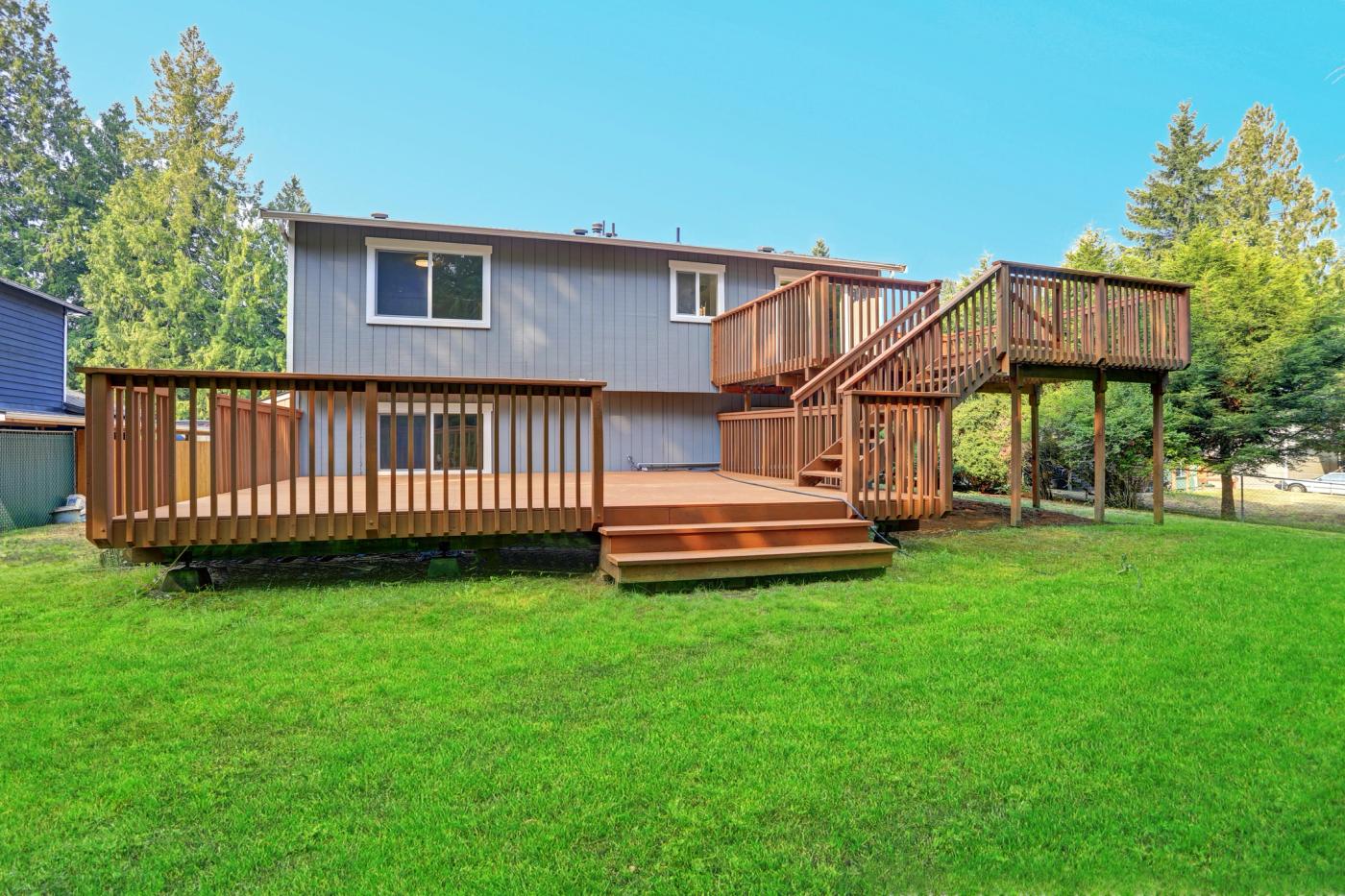
What These Terms Mean
Outdoor Living Spaces Built to Last the Bay Area Climate
Composite decks and hardscaping give Redwood City homeowners a durable, low-maintenance outdoor space that holds up year-round.
Composite decking is engineered board made from wood fiber and recycled plastic, capped with a synthetic polymer shell that resists moisture, UV fading, and staining. Hardscaping refers to the non-plant elements of outdoor design: patios, retaining walls, walkways, steps, and built-in features like planters or fire pits. Together, they convert underused backyard space into a permanent extension of your home's livable square footage. Bark & Build handles the full scope — design, permits, and construction — under one roof, the same way we approach whole-home remodeling in Redwood City.
Capped Polymer Composite
Composite boards with a fused polymer shell on all four sides. Resists fade, scratch, mold, and moisture absorption. Industry-standard 25–50 year fade warranties.
Ledger Board
The structural connection between the deck and the house. Multi-layer flashing here is the single most important detail for long-term moisture protection of your home.
WUI (Wildland-Urban Interface)
California fire-hazard zones requiring ignition-resistant exterior materials. Most of Redwood City west of Alameda de las Pulgas falls inside a designated WUI area.
Surcharge (Retaining Walls)
Additional weight on a retaining wall beyond just the soil it holds back — a driveway, deck, or hot tub above. Surcharge calculations determine engineering and permit requirements.
Joist Spacing
Distance between supporting frame members under the decking. Standard is 16" on-center; we tighten to 12" OC for diagonal patterns or heavier composite boards to eliminate flex.
Permeable Base
Compacted Class II road base laid under pavers in 2" lifts. Creates a load-bearing surface that drains water and stays level for decades without settling.


Peninsula Conditions
Redwood City's Outdoor Conditions Shape Every Deck We Build
Building decks on the San Francisco Peninsula means working with a very specific set of conditions.
Redwood City sits in one of the sunnier pockets of San Mateo County, but coastal fog still rolls through regularly — roughly 60 fog days per year east of Skyline. That fog-plus-sun combination is tough on traditional wood. Boards expand, contract, and split. Composite handles it differently. The material holds its color and structure through wet winters and dry summers without annual sealing or staining.
Many homes in Redwood City and across San Mateo County were built between 1948 and 1985 on sloped lots or have narrow side yards and irregular property lines. That affects how a deck is engineered — setback rules, foundation depth, and load calculations all vary. For homeowners focused on expanding your home's usable square footage, the backyard is often the most practical place to start. Our team works directly with the Redwood City Planning and Building Division and is familiar with permit pathways across San Mateo County. That familiarity prevents delays before the first board goes down.
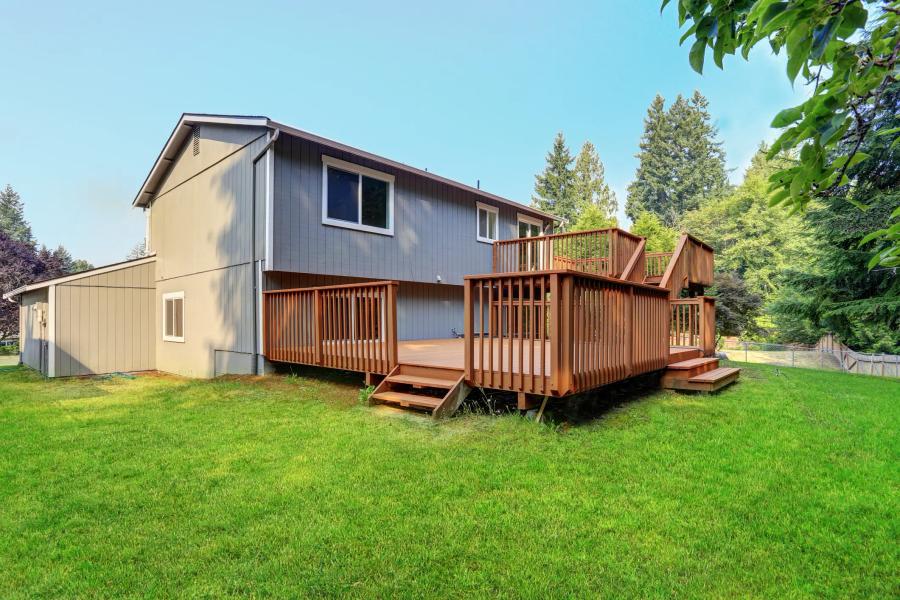
Material Comparison
Composite vs. Pressure-Treated Wood — What Changes Over 10 Years on the Peninsula
The decision between composite and wood is the single biggest material choice you'll make. Most clients ask us this in the first conversation. Here's what actually differs across a 10-year ownership window in our climate.
| Factor | Capped Composite | Pressure-Treated Wood |
|---|---|---|
| Annual Maintenance | None. Hose-rinse only. | Sand, seal, stain every 2–3 years. Roughly $1,500–$3,500 per cycle. |
| Color Stability | 25–50 year manufacturer fade warranty. Holds factory color through UV exposure. | Visible silvering within 12–18 months without sealing. Color rebuild required. |
| Moisture Behavior | Does not absorb water. No swelling, cupping, or splitting. | Expands and contracts with seasonal humidity. Splitting and cupping common after year 3. |
| WUI Fire Compliance | Class-A fire-rated lines available — meet ignition-resistance requirements in hazard zones. | Most pressure-treated lumber not approved in designated WUI hazard zones. |
| Upfront Cost (per sq ft) | $45–$70 installed (material + labor) | $28–$45 installed (material + labor) |
| 10-Year Total Cost | Installation cost only. Maintenance under $200. | Installation + 3–4 staining cycles. $4,500–$14,000 in upkeep. |
| Surface Heat (Direct Sun) | Modern lines use heat-dissipating polymer technology. | Stays cooler than dark composites but degrades faster. |
| Expected Service Life | 30+ years with intact warranty. | 10–15 years before structural board replacement is needed. |
We build both — the choice depends on budget, aesthetic preference, and lot location. For homes in WUI zones, capped composite is often the more practical path because the upfront cost difference is partially offset by Class-A fire compliance being built into the material rather than added as an upgrade.
Fire Code Compliance
WUI Fire Code Navigation from Emerald Hills to the Fox Theatre District
Building in Redwood City means working across distinct topological zones with different fire-hazard classifications.
The requirements for a flat-lot paver patio near the historic Fox Theatre district are entirely different from engineering a multi-level cantilevered deck in Emerald Hills. As you move west of Alameda de las Pulgas, regulations sharpen to protect properties from wildfire threats.
The 2026 Wildland-Urban Interface (WUI) fire codes specify exactly which materials are approved for the exterior of your home. We design ignition-resistant assemblies engineered to clear city inspections on the first pass — utilizing enclosed soffits, specific joist spacing, and approved composite materials that prevent ember intrusion. For homes in designated hazard zones, our fire-rated assemblies streamline both permitting and homeowners' insurance qualification.
Standard pressure-treated pine is not approved in these designated hazard zones. We default to Class-A fire-rated composite decking, enclosed under-deck soffits, and ignition-resistant fascia wrapping on every project west of Alameda de las Pulgas — and on any property within 30 feet of an unmaintained brush line elsewhere in the county.
Case Study — Woodside Road Corridor
How a Backyard in Redwood City Became a Year-Round Space
This project showed me how much the right materials change a homeowner's relationship with their outdoor space.
From the Field
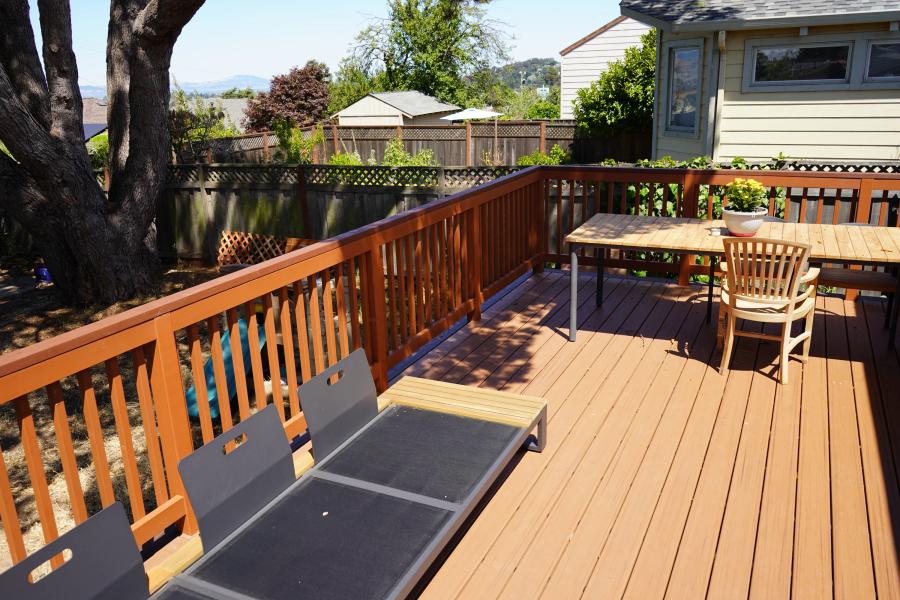
Replacing an Aging Wood Deck with a Two-Tone Composite Build
I'll walk you through a project we completed in a Redwood City neighborhood near the Woodside Road corridor. The homeowner had an older wood deck showing real wear — not structural failure, just the slow deterioration that comes from years of fog cycles and direct sun. They wanted to replace it and extend the footprint to include a defined patio zone with a low retaining wall along the slope.
We started with a site evaluation. The existing deck posts were still solid, which gave us a strong starting point and saved roughly $4,800 on new concrete footings. We designed a new composite deck surface using a multi-tonal warm-toned board pattern — one that wouldn't show the chalky white residue that lighter composites sometimes develop in coastal conditions. That detail matters more than most homeowners realize until a few seasons in.
The hardscape portion included a poured concrete base with custom-stained sienna spindle railings extending from the deck's edge, with integrated bench seating built into the perimeter. Projects like this one reflect our broader experience building custom backyard structures in Redwood City, where maximizing underused space on sloped or irregular lots is often the central challenge. Everything required a permit, and we handled that coordination directly with the city. If you'd like to understand our local construction team and process, that context shapes how we approach permit coordination and scheduling from the start.
The homeowner's main concern was timing. They had a family event about 10 weeks out. We scheduled backward from that date and hit it. The space has been in regular use since. No sealing. No staining. Just maintenance-free outdoor living.
That's the outcome we're building toward on every project.


Permit Process
Permits Are Part of Our Process — We Handle Them Start to Finish
Every composite deck and hardscape project in Redwood City goes through us for permitting — we handle it start to finish.
Deck permit requirements in San Mateo County vary by jurisdiction. Redwood City has its own review process. East Palo Alto has different setback standards. Some municipalities require structural engineer sign-off on elevated decks above a certain height.
We file the permit applications. We respond to plan check comments. We schedule inspections. You don't need to navigate any of that. This isn't an add-on service — it's built into how we operate. Plan check timelines run 3 to 6 weeks for most deck permits in San Mateo County; we build that window into the schedule upfront so it doesn't extend your project unexpectedly.
A deck without a closed permit is a liability at resale, refinance, and insurance qualification. We close every permit before a project is complete.
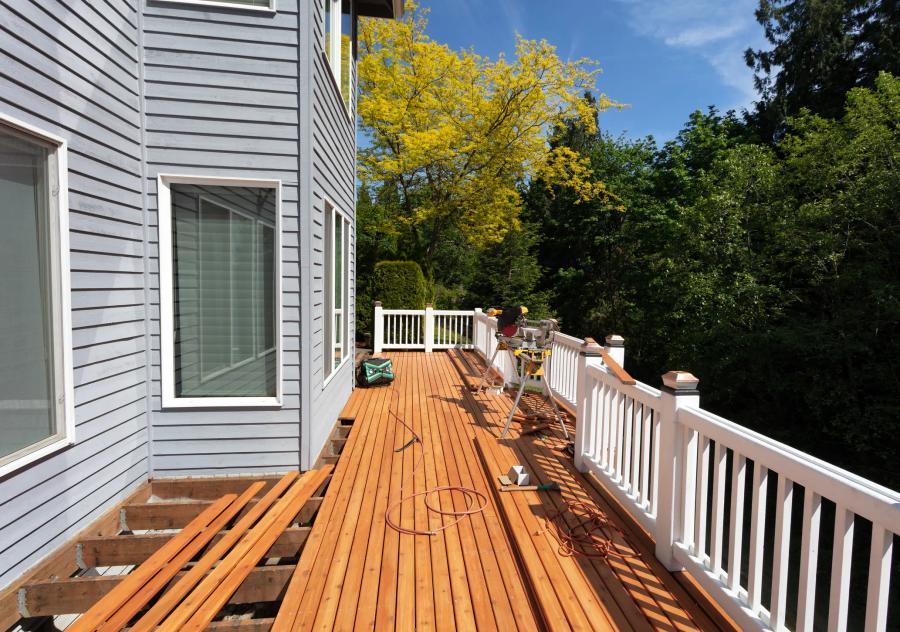
Our Operating Standards
Standards Every Bark & Build Deck and Hardscape Project Is Held To
Quality control starts with materials, and it doesn't stop until the permit is signed off.
1
Composite Decking — Established Manufacturers Only
Capped polymer boards from manufacturers with documented 25–50 year fade warranties and Class-A fire ratings available. No off-brand composite.
2
Substructure Rated for Ground Contact
Pressure-treated lumber rated for ground contact where applicable. Steel framing on spans carrying outdoor kitchens, hot tubs, or other heavy fixed loads.
3
Hidden Fastener Systems
Hidden clip-based fastener systems for a clean surface finish, reduced moisture intrusion points, and easier individual board replacement if ever needed.
4
12" OC Joist Spacing for Diagonal Patterns
Standard 16" on-center spacing tightened to 12" OC for diagonal board patterns or heavier board profiles. Eliminates flex, produces a solid feel underfoot.
5
Multi-Layer Ledger Flashing
Self-adhering membrane plus metal cap flashing at the house-to-deck connection. The single most important detail for keeping the rim joist dry over the lifetime of the deck.
6
Drainage Calculated Before Anything Is Built
Every patio and hardscape design accounts for water runoff direction with a minimum 2% slope away from foundations. Flat surfaces that pool water don't get approved internally.
7
All Required Inspections Passed and Closed
We schedule and pass all city and county inspections — footing, framing, final — before project closeout. Permit officially closed on the county record.
8
Steel Post Standoffs — No Wood-to-Earth Contact
All structural posts elevated above grade on concrete piers with galvanized steel standoff bases. Removes the termite-pathway risk that ends most older wood decks.
How We Execute
Our 4-Phase Construction Process — From Site Visit to Permit Closeout
Every project follows a defined process — no surprises at any stage.
Phase 1 · Week 0
Site Evaluation & Design
Site visit. We assess slope, existing structure if present, drainage patterns, and sun exposure. Our in-house design team translates what you want — a deck, a patio, a retaining wall, or a combined space — into a buildable plan with material selections, layout, and a written budget that fits your lot.
Phase 2 · Weeks 1–6
Permitting & Plan Check
Once design is approved, we submit for permits. San Mateo County plan check typically runs 3–6 weeks. We handle all plan check responses and revisions. We build this window into the schedule so it doesn't extend your project unexpectedly.
Phase 3 · Weeks 6–10
Construction & Trade Coordination
Construction begins once permits issue. Our crew handles demo, foundation or footing work, framing, composite installation, and hardscape construction in proper sequence. Footing inspection mid-phase. Framing inspection before decking goes down. One project lead coordinates every trade on-site.
Phase 4 · Week 10–12
Final Inspection & Walkthrough
After construction wraps, we schedule the final inspection with the city or county. Once that's passed, we walk the entire project with you. We check every board, every edge, every transition point — then close the permit on the county record. The project isn't done until that record is closed.
Investment Range
What a Composite Deck or Hardscape Project Costs in San Mateo County
Pricing varies based on slope, scope, and material tier. We don't give precise numbers before a site visit because every Peninsula lot is different. These are realistic ranges based on completed projects across Redwood City and the Peninsula.
Standard Composite Deck
$25K – $45K
Engineered substructure with Class-A fire-rated composite decking. Multi-layer ledger flashing. Steel tension ties. 3000 PSI concrete footings. Hidden fastener system. Standard hardware railings. Ideal for flat to moderately sloped lots up to roughly 400 sq ft.
Multi-Level Deck + Hardscape
$45K – $85K
Tiered deck system with retaining walls. Cut-and-fill grading. CMU block walls with rebar and drainage aggregate. Paver patio with compacted Class II base. Custom railing systems. Steel framing for heavy spans. Full WUI compliance.
Complete Outdoor Living Estate
$85K – $150K+
Integrated outdoor kitchen with 220V electrical, dedicated gas line, and plumbing. Masonry island with reinforced concrete pad. Multi-tier composite deck. Full hillside stabilization. Water features. Acoustic and privacy structures. Premium board and railing lines.
All ranges include permits, engineering stamps where required, geotechnical assessment for hillside work, and complete WUI fire code documentation. Final budgets confirmed through a pre-construction site assessment — we don't issue ballpark numbers before seeing your property.
Service Area
Where We Build Decks and Hardscaping
Bark & Build serves homeowners across San Mateo County.
We build composite decks and hardscaping throughout Redwood City and the surrounding Peninsula communities. Our service area covers the full county — from the flat lots of Foster City and Belmont to the steep hillside properties of Emerald Hills, Farm Hill, and Palomar Park. Each city has its own permit review cadence and inspection sequence, and we've worked through them all.
Redwood CityMenlo ParkSan CarlosBurlingameSan MateoFoster CityBelmontAthertonHillsboroughMillbraeEast Palo AltoHalf Moon BayEmerald Hills

Common Questions
Frequently Asked Questions on Bay Area Composite Decks & Hardscaping
How much does a composite deck or hardscape project typically cost in San Mateo County?
Most composite deck and hardscape projects range from $25,000 to $75,000 depending on size, slope, and scope. Elevated decks on sloped lots cost more due to deeper footings and structural requirements. Combined deck-plus-patio projects cost more than single-element builds. We don't give ballpark numbers before seeing your property — every site in Redwood City presents different conditions that directly affect pricing.
How long does a composite deck or hardscape project take from first visit to final inspection?
Most projects take 8 to 14 weeks from site visit to permit closeout. Permit review in San Mateo County adds 3 to 6 weeks to that window. We build that review period into the schedule upfront so it doesn't create surprises. Construction itself typically runs 4 to 8 weeks depending on scope.
Does composite decking actually hold up to the fog and sun cycle on the Peninsula?
Yes. Capped composite boards are engineered specifically for moisture and UV exposure. Traditional wood expands and contracts through wet-dry cycles, splitting and fading over time. Composite maintains its structure and color without annual sealing. We select board lines with low-fade ratings (typically 25–50 year manufacturer warranties) suited to coastal California conditions.
Why hire one company for both the deck and the hardscaping instead of separating the trades?
Single-scope management eliminates coordination gaps between contractors. Drainage, transitions, and permit submissions all connect across a deck-patio project. When different crews handle each piece, alignment errors at the junction points are common. Our team designs and builds both elements together, so the drainage plan, material transitions, and inspection schedule work as one project — not two.
Is a permit really required for a composite deck replacement in Redwood City?
Any deck above 30 inches in height, any structural modification, and any new hardscape over a certain square footage triggers a permit requirement. Even a like-for-like deck replacement often requires permit review if footings are altered or if the original deck was never permitted. We handle all permit filings, plan check responses, and inspection scheduling — no homeowner action required on that side.
When is a permit required for an engineered retaining wall?
The Redwood City building department requires a permit for any retaining wall holding back more than 3 feet of earth, or for any wall (regardless of height) supporting a surcharge. A surcharge includes the weight of a driveway, a sloped yard, or a new deck built above the wall. We build using CMU blocks reinforced with vertical and horizontal steel rebar, fully grouted with high-strength concrete, with perforated drainage pipe behind the wall to manage hydrostatic pressure.
How do you handle WUI fire codes for composite decks on Peninsula hillside properties?
The 2026 WUI fire codes require ignition-resistant fascia, enclosed soffits, and approved non-combustible substructure wrapping for homes in designated hazard zones — which includes most of Redwood City west of Alameda de las Pulgas and properties within 30 feet of unmaintained brush. Standard pressure-treated pine is not approved in these zones. We engineer exterior extensions using Class-A fire-rated composite assemblies and specific joist spacing designed to prevent wind-blown ember intrusion.
What warranties come with a Bark & Build composite deck?
We provide a 5-year structural workmanship warranty alongside the manufacturer's 25-to-50-year fade and stain guarantees on capped polymer boards. Our warranty covers the heavy framing, steel tension ties, ledger flashing, and concrete footings — the elements where failure would compromise the structure. We use established composite manufacturers specifically because their material warranties are honored without litigation when claims arise.
Start Your Project
Start Your Outdoor Project With a Real Conversation
Your composite deck or hardscape project begins with one call or message. We'll schedule a site visit, talk through what you're trying to build, and give you honest feedback on what's achievable on your lot and timeline. No high-pressure pitch. No vague ballpark numbers before we've seen your space.